On the morning of June 30, the Ministry of Education held a promotion conference in Beijing on the theoretical research and interpretation of the Party’s innovative theories in universities and the construction of an autonomous knowledge system for Chinese philosophy and social sciences. At the conference, the results of the 10th Ministry of Education Outstanding Achievement Award in Scientific Research (Humanities and Social Sciences) were announced. A total offour achievements from the School of Social Development were awarded the Third Prize.
The Ministry of Education Outstanding Achievement Award in Scientific Research (Humanities and Social Sciences) is the highest-level, most influential, and most recognized authoritative award in the field of humanities and social sciences in China. In this round, ECNU won a total of 48 awards, ranking 4th among universities nationwide in both total number of awards and number of first prizes. The School of Social Development achieved an application success rate of over 50%, fully demonstrating the school’s research strength and academic influence in the field of humanities and social sciences.
Title of Achievement | Type | Applicant | Level |
Coordinated Optimization of National and Provincial Teacher Allocation under the Goal of Building a Strong Education Nation | Publication/Paper Award | Wu Ruijun | Third Prize |
The History, Practice, and Possible Paths of Chinese-Language Anthropology | Publication/Paper Award | Huang Jianbo | Third Prize |
Evolutionary Trajectories and Transition Patterns of Population Age Structure: International Comparison and Chinese Characteristics | Publication/Paper Award | Ding Jinhong | Third Prize |
The Sacred and the Mediation of the Sacred : Core Concepts and Fundamental Propositions in the Sinicization of Sociology of Religion | Publication/Paper Award | Li Xiangping | Third Prize |
Introduction to the Awardees and Their Achievements
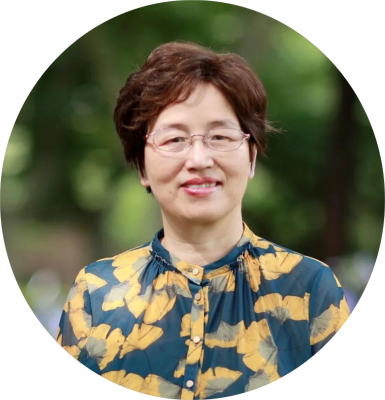
1.Wu Ruijun (Third Prize, Publication/Paper Award)
Title:Coordinated Optimization of National and Provincial Teacher Allocation under the Goal of Building a Strong Education Nation
Summary: The research focuses on the optimization paths of teacher allocation across all educational stages at the national and provincial levels from 2023 to 2035. Taking population dynamics and cross-provincial mobility as the core entry points, it constructs for the first time a dynamic framework for teacher allocation covering all provinces and all educational stages, adapted to different types of population growth areas. Breaking through the partial perspectives and static reference frames of existing research, the study holds significant academic value and decision-supporting significance for establishing a new paradigm of educational demography and building a “basic public education service supply mechanism coordinated with population changes.”

2.Huang Jianbo (Third Prize, Publication/Paper Award)
Title:The History, Practice, and Possible Paths of Chinese-Language Anthropology
Summary: This research aims to promote the construction of an autonomous knowledge system in anthropology and global dialogue. Focusing on the core concept of “Chinese-Language Anthropology,” it deeply explores the necessity, historical context, practical realities, and future paths of producing anthropological knowledge and constructing theory in Chinese. Transcending the traditional scope of “Chinese anthropology,” the study innovatively proposes a “Chinese-Language Anthropology” theoretical framework, directly engaging in dialogue with the international frontiers of “world anthropologies” and “Southern theory,” and exploring paths of knowledge production rooted in local experience. It represents a frontier effort in Chinese academia’s pursuit of theoretical self-awareness and autonomy.
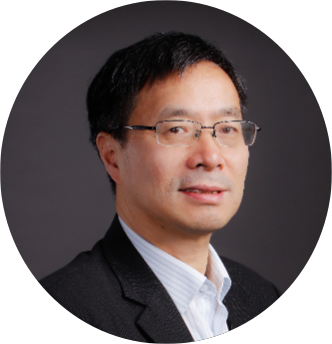
3.Ding Jinhong (Third Prize, Publication/Paper Award)
Title:Evolutionary Trajectories and Transition Patterns of Population Age Structure: International Comparison and Chinese Characteristics
Summary: The research proposes a three-element structural triangle diagram method that “condenses” the proportions of the old, middle-aged, and young population segments into a single point within a triangle, enabling visual representation and multi-group comparison of population age structures. The paper innovatively expresses the temporal changes in the age structure of populations across countries worldwide and various Chinese provinces as trajectory lines, revealing common patterns in population age structure transitions. It proposes standardized nomenclature for nine typical directions, including declining fertility, population aging, demographic dividend, and demographic debt, as well as seven basic types such as “multi-child type” and “low-fertility-elderly type,” remedying the deficiency of traditional population age structure classifications that ignore the working-age segment.
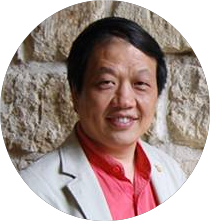
4.Li Xiangping (Third Prize, Publication/Paper Award)
Title:The Sacred and the Mediation of the Sacred: Core Concepts and Fundamental Propositions in the Sinicization of Sociology of Religion
Summary: Published inSociological Studies (Issue 2, 2024), this work takes “the sacred—the sacred mediator—the state-family emulation mechanism” as its main thread, viewing the sacred as a process continuously symbolized, institutionalized, and emotionalized through social mediation. It emphasizes that sacred relationships can be produced and reproduced in social and civilizational practices. The paper systematically analyzes the typological structure of “sacred mediators” in Chinese civilization and the social functions of the “emulation mechanism,” representing cutting-edge achievements and important breakthroughs in the field of Chinese sociology of religion in recent years regarding theoretical self-awareness and disciplinary autonomy.
The above award-winning achievements, respectively covering four key areas—educational resource allocation, anthropological knowledge production, population structure analysis methods, and the sinicization of sociology of religion—take Chinese issues as their starting point, Chinese experience as their material, and Chinese theory as their destination. They collectively embody the school’s systematic efforts in constructing an autonomous knowledge system for Chinese philosophy and social sciences and enhancing international academic discourse power. The school will continue to strengthen organized research, persistently promote interdisciplinary integration and the construction of an autonomous knowledge system, and contribute greater strength to serving national strategic needs and the prosperity and development of philosophy and social sciences.